Cockatiels should never be left
alone in a room when out of the cage. They go about their business merrily, swiftly and
very quietly. In a split second, a pet bird can become the victim of a tragic
and oven preventable accident. Losing a bird to a household accident is a
devastating experience for people who love their birds. As much as we try to
keep our homes safe and bird proof, cockatiels and other parrots can get
themselves into a dangerous situation if they are not monitored constantly when
they of their cages. Bird proofing the home means that we have to be aware of
potentially dangerous situations that can harm our birds well in advance before
an accident happens. Think of your bird as a toddler with wings, and exercise the same
caution and judgment when your bird is out of the cage. The list of household
hazards on this page is extensive and by being aware of these situations, you
may be able to prevent an accident and save the life of your bird.
Non-Stick Cookware:
According to the American Veterinary Medical Association and the American Association of Poison Control
Centers, fumes from
overheated Teflon® and other non-stick products coated with
PTFE (Polytetraflouethylene ) are lethal to birds. Toxicity occurs when pots are left on a hot stove and they become overheated. It was originally thought that cookware had to reach a
temperature of 500° Fahrenheit or 280° Celsius before poisoning occurred.
Recently, temperatures as low as 285° F have been found to
be fatal to birds. Fumes start being emitted as soon as the product starts
heating, resulting in the release of toxic particles into the air that cause severe
and irreversable damage to
a bird's lungs when inhaled. Birds are unable to clear toxic particles by
exhaling or coughing and are therefore more susceptible to this type
poisoning. Toxic fumes travel through an entire house quickly. Even if birds are in
another room they can still die.
Death can occur within a few seconds or it can take up to 24 hours after exposure
because the fumes can linger in curtains, upholstery and other
materials. Death from overheated non-stick cookware fumes is very painful
and necropsy of birds that have died after exposure to these fumes show lesions and hemorrhaging of the lungs.
Teflon® and all brands of non-stick cookware as well as many appliances are coated with a fluoropolymer
resin. Different companies have
different brand names for the same type of resin. PTFE coating can be found on pots and pans, skillets, griddles, cookie sheets, cake pans,
and other bakeware, stove drip pans and broilers, self-cleaning ovens, electric
fry pans, woks, crock pots, deep fryers, popcorn makers, bread machines, indoor
grills, and other products such as irons, ironing board pads, curling irons, blow
dryers, space heaters and now some types of heat lamps and light bulbs. Always read the accompanying literature for new cookware, appliances, light bulbs to see if it says "NON STICK" or "PTFE". If it does then it's coated with a fluoropolymer type substance.
If you are not sure, call the company and ask. DON'T rely on the say so of the store
clerk. Don't take any chances
with non-stick cookware or products, thinking it's fine to use as long as it doesn't overheat. Get rid
of it. Use stainless steel, aluminum, Pyrex®, enamel or cast iron cookware instead. For more
information on Teflon® and Birds, Click
Here. Dupont has recently been ordered by the courts (2005) to release
documentation that has been kept hidden from the public for 20 years. Dupont has known for 20 years that fumes from Teflon® can be hazardous to humans
and birds.
Other Kitchen Fumes:
Fumes from oven cooking bag, oven liners, self cleaning ovens, silicone
bakeware, leaking gas, burning plastic handles on
pots, burning food,
overheated cooking oil, fats, margarine, butter, from burning food on aerosol spray on "Non-Stick" products
can be lethal to birds.
Pine Scented Cleaners:
These types of disinfecting
agents are toxic. Do not use them to clean cages, food and water dishes and do
not use them around your bird. Always read labels on cleaning products to see if
there are any safety warnings regarding birds.
Chemical Odors:
Fumes from mothballs, pesticides, hairsprays, perfumes, nailpolish remover, bleach, ammonia,
paint, varnish, paint remover, permanent markers, nicotine, air freshener
(sprays & hanging ones in cars/homes and plugins), carpet
fresheners, scented candles, incense or any other product with fumes you can
smell, can make your bird sick or cause death. Don't use
them around your bird. Birds can absorb nicotine on your hands through their
skin. Contact with nicotine will make your bird itchy.
Pesticides: Are
toxic. Don't ever use them around your bird.
Remodeling:
New carpet backing, paneling, and particleboard contain formaldehyde, and fumes are LETHAL.
Paint, varnish and wallpaper paste all contain toxic fumes. Arrange for
someone else to keep your bird until you can no longer smell the fumes.
Glade®
Scented Candles:
or any scented candles contain lethal amounts of carbon monoxide,
soot and essential oils.
Products contain warning labels about using around pets.
In the USA call Johnson and Johnson Customer Service at 1-800-494-4855.
From Canada call 1-877-506-7352 for details.
Molds and Fungi:
Improperly stored seeds and grains
as well as other foods may be contaminated with fungi and molds.
High humidity, warm temperatures and poor ventilation favor their growth. Seeds,
grains, fruit, meat, cheese, bread and other foodstuffs can become toxic if
contaminated with molds. Mycotoxins are toxic compounds produced by many
species of mold-causing fungi. Under the right conditions, fungi will multiply
rapidly, producing high levels of mycotoxins. "Moderate levels of this
compound, if ingested, will cause lesions on a bird's organs and may have
carcinogenic effects (cancer causing). High levels of mycotoxins are lethal and
can cause mortality within 2-3 days." (Source: Avian Medicine, Principles
and Applications, Ritchie, Harrison & Harrison, page 27) Birds and other
pets are especially susceptible to being poisoned by mycotoxins because of poor
quality control and improper storage of food. Although some molds are visible,
like the fuzz on old bread and strawberries, mycotoxins if present, can
not be detected by sight, taste or smell and they can not be destroyed by
cooking or freezing. Never feed your bird mushy, discolored, bruised
fruits or vegetables or a food that has mold growing on it. "When in
doubt, throw it out."
Store seeds in an airtight container, in a cool dry spot.
Peanuts and Peanut Products:
Fresh peanuts, brazil nuts and other nuts in shells, bulk peanut butter, or peanut butter from health food store can
contain a
fatal toxin
called Aflatoxin. Aflatoxin is, produced by a fungus that grows under the
shell of nuts. Avoid feeding fresh
nuts in shells to your birds and only use a high quality
commercial peanut butter for your birds. Commercial brands of peanut butter are
monitored for aflatoxin.
Heavy Metal Poisoning and Sources of Lead and Zinc:
Metal hardware, wires, coat hangers, pennies, twist ties for plastic bags, stems on artificial
flowers, Christmas tree ornament hooks, stained glass items, some wire toys, cages with loose solder and chipped paint,
fishing weights, drapery weights, costume jewelry, zipper teeth and paint in older
homes, glue on cardboard rolls from paper towels and bath tissue, duct tape,
metal ends of light bulbs, flooring, lead water pipes in your home, can all contain zinc or lead.
Galvanized
metals
are also toxic because a coating is applied over a lead or zinc base item. Ingesting
heavy metals or rust is LETHAL and will cause death
or permanent neurological damage if not treated immediately. If you have lead
or galvanized metal
water pipes in your home
or your source of drinking water comes from an underground well, avoid giving your bird
tap water to drink and bath in. The water could contain lead or zinc. Give your bird bottled water
instead. Symptoms of
heavy metal poisoning
include loss of balance, muscle weakness, inability to
fly, red droppings, vomiting and respiratory distress. Do not let you bird chew
on any type of metal or product that contains a glue-like adhesive.
Infections and Disease:
Cockatiels are susceptible to e-coli bacteria and salmonella poisoning, the
same as humans.
Wash your hands after using the lavatory and after you handle meat. If serving cooked meat to your bird, cook
thoroughly and do not re-serve it to your bird after it has been cooked and
refrigerated. Keep the cage and feeding dishes clean and free from droppings. Birds can
also get sick from you if you have a bacterial infection, like the flu or a cold.
Don't let your bird eat from your mouth and avoid playing with
and handling your bird if you are sick. Wash you hands with hot soapy water and
use a hand sanitizer before feeding your bird.
The Pet Shop:
Some very serious and contagious avian diseases and infections can be
brought home to your bird after visiting pet shops or bird marts.
Many diseases are transmitted by bird dander, circulation of dried droppings,
nasal secretions and airborne spores. Some diseases, like PDD and PBFD
are fatal to birds. Always shower and change your clothes after being around any other
birds. Visitors to your home who own birds, pose the same threat.
Don't let strangers handle your bird.
Drafts: Although
drafts will not make a healthy, well nourished bird sick, drafts can make birds
that are malnourished, getting sick or birds under a great deal of stress sick.
Avoid keeping your bird's cage in a draft. Check for both warm and cold drafts by holding a lit candle in the area of the cage.
If the flame flickers, there is a draft.
Direct Sunlight:
Putting a bird in direct sunlight
for prolonged periods of time can cause it to suffer from hypothermia, heatstroke, or
heart failure. Symptoms of an overheated bird include panting and holding
wing feathers away from the body. Make sure your bird has access to some shade when taking it
outdoors or when next to a sunny windows.
UV Lighting:
Light from full spectrum bulbs that are too close to the cage, for more than 3 hours a day is the same as
leaving a bird out in the sun from noon to 3 PM.
Lamps:
Halogen and torch lamps become dangerously hot. Flying birds that land on them will
burn their feet severely. Turn floor lamps off when your bird is
out of the cage.
Matchsticks:
Unless using child safety matches, matches are poisonous.
Pens, Crayons, Markers:
These items contain toxins and are poisonous. Don't let your bird chew on them.
Permanent markers also contain fumes that are toxic.
Toys and Cages:
Check the cage for things that a bird could get its head, foot or nails
stuck into. By struggling
to free itself, a bird can break it's neck, toes, feet, or legs. Look for rings, clips, loops, coils of wire and
slits in toys. Never purchase a cage with openings large enough for a bird to get its head stuck in.
Rope toys fray
and toes can get entangled. Use only under supervision. Check cage toys daily
for signs of wear that could cause harm.
Water Dispensers:
Mechanisms can become jammed, or clogged with a small bird toy, resulting in water deprivation.
A bird will die if left without water for 24 hours.
Starvation:
Cockatiels are experts in hulling seeds. Often a seed dish will look full when it actually contains
only the empty hulls. Check seed cups daily and replenish.
Window, Doors, Mirrors:
Birds can fly out of open unscreened windows or doors. Flying into clear glass or mirrors,
can result in a concussion, broken neck, or wing. A bird's wings should be clipped moderately so it can glide
to the floor.
Keyboards, Carpets, Fabric, Jewelry:
Toes and nails can become caught or entangled in the spaces between keys on the computer keyboard, loops from filigree
jewelry, (rings and bracelets), loops in carpets, knitted items, terry cloth, lace and frayed ribbon.
By struggling to free itself, a bird can break a foot, leg, toe or rip a nail
right out of the skin, requiring surgery to repair. Keep nails trimmed.
Electrical Wires and Outlets:
A bird will electrocute itself by chewing through a wire from a lamp, or any other
electrical appliance.
Houseplants:
Philodendron, dieffenbachia, calla lily, amaryllis, dried Eucalyptus mistletoe, poinsettia,
leaves from indoor tomato and potato plants, are just a few of many lethal plants. Don't ever spray an indoor plant
with a pesticide. Pesticides are lethal.
Tylenol and Drugs
According to the American Veterinarian Association,
only 2 Tylenol will
kill a cat and with repeated use, a dog. Don't ever give your bird any human medications. Furniture:
Always look at chairs
before sitting down. Your bird may be on it and you will crush it to death when
you sit down. If you can't find your bird don't sit in a
reclining chair. Your bird may be under it and it will be crushed by the chair's
mechanism.
Bathrooms:
Keep toilet bowl lids closed. Flying birds can land on the seat, fall into the
water and drown.
Sinks and tubs:
Bubbles in the water can be mistaken as a landing surface.
If a bird steps onto the bubbles or lands on them, it can can get scalded or drown.
Aquariums:
Birds are often attracted to both the sight and sound of water. If you keep an aquarium, keep a lid on it
to prevent your bird from drowning..
Boiling pots:
Don't let your bird
out of the cage when cooking. Birds are attracted to shiny objects. Your bird may
wander over or fly and land on the the edge of a pot, scalding feet of fall
into the pot scalding itself to death.
Hard Floors:
Birds with wings clipped too short, will not be able to glide to the floor.
Injury can result from a fall. Ask your avian vet for a moderate wing clipping.
Open Windows, Doors and Loose Screens: To
prevent your bird from escaping, keep windows closed, check screens to make sure
they are not loose and never open doors when your bird is out of the cage
Nooks
Birds can get accidentally locked into cupboards, drawers, closets, microwaves, ovens,
refrigerators, washing machines, dryers, trashcans and large decorative vases. If not found, they will be
injured, starve or suffocate.
Ceiling Fans
and Hanging Lamps: A bird will get severely injured,
disabled for life or killed instantly if hit by the moving blades of a ceiling
lamp. Birds landing
on hanging lamps may burn their feet or chew on wires, resulting in electrocution. Tiffany lamps
contain lead soder between panels of glass. Birds that ingest it will get lead
poisoning.
Wing Clipping:
New evidence has shown that if a baby bird's wings are clipped before learning to fly, it may never
learn to fly. Flying has psychological benefits for birds kept in captivity.
Research recommends managed flying, where just the tips of flight feathers are clipped for the bird's safety, but
the bird can maintain level flight with effort and glide gently when landing. Flight areas in the home should be bird
proofed with window curtains shut. Supervise flight times keeping the doors locked. Don't cook and keep other pets
excluded from this area.
You:
Look before you walk or sit down. You can step or sit on your cockatiel and injure it.
Sleeping with Your Bird:
No matter how cute you think it is, don't do it.
You will eventually roll over on top of your
bird and kill it.
Children:
Children can crush a cockatiel to death by grabbing it too tightly. Teach children
to look, but not to touch a bird. They can also put tiny things that are dangerous for your bird, such as
matchsticks, crayons and chocolate, inside the cage.
Cats and Dogs: Cats hunt and kill birds. They also carry a bacteria that is lethal to birds.
A playful dog can injure tiny organs and bones by pawing or stomping a
cockatiel to death.
Keep other pets away from your bird.
Bleeding:
Birds have growing feathers called blood feathers. A broken blood feather will
bleed profusely and losing more than 20% of blood causes death. If you don't know how
to remove the shaft, seek medical help immediately. If
your bird is injured and bleeds, apply direct pressure and use cornstarch or
white flour as a coagulant.
Keep the name and phone number of an avian veterinarian near your
telephone. Your local veterinarian probably does
not treat birds and it can be very difficult locating one during an emergency
crisis when you're in a panic. If you don't have the name of an avian
veterinarian, Click on the Nurse to find one now.
All you do is type in your area code and you will get
a listing of all of the avian veterinarians in your area.
Special
Thanks to all who have shared photographs of their birds with us.


 Non-Stick Cookware:
According to the American Veterinary Medical Association and the American Association of Poison Control
Centers, fumes from
overheated Teflon® and other non-stick products coated with
PTFE (Polytetraflouethylene ) are lethal to birds. Toxicity occurs when pots are left on a hot stove and they become overheated. It was originally thought that cookware had to reach a
temperature of 500° Fahrenheit or 280° Celsius before poisoning occurred.
Recently, temperatures as low as 285° F have been found to
be fatal to birds. Fumes start being emitted as soon as the product starts
heating, resulting in the release of toxic particles into the air that cause severe
and irreversable damage to
a bird's lungs when inhaled. Birds are unable to clear toxic particles by
exhaling or coughing and are therefore more susceptible to this type
poisoning. Toxic fumes travel through an entire house quickly. Even if birds are in
another room they can still die.
Death can occur within a few seconds or it can take up to 24 hours after exposure
because the fumes can linger in curtains, upholstery and other
materials. Death from overheated non-stick cookware fumes is very painful
and necropsy of birds that have died after exposure to these fumes show lesions and hemorrhaging of the lungs.
Non-Stick Cookware:
According to the American Veterinary Medical Association and the American Association of Poison Control
Centers, fumes from
overheated Teflon® and other non-stick products coated with
PTFE (Polytetraflouethylene ) are lethal to birds. Toxicity occurs when pots are left on a hot stove and they become overheated. It was originally thought that cookware had to reach a
temperature of 500° Fahrenheit or 280° Celsius before poisoning occurred.
Recently, temperatures as low as 285° F have been found to
be fatal to birds. Fumes start being emitted as soon as the product starts
heating, resulting in the release of toxic particles into the air that cause severe
and irreversable damage to
a bird's lungs when inhaled. Birds are unable to clear toxic particles by
exhaling or coughing and are therefore more susceptible to this type
poisoning. Toxic fumes travel through an entire house quickly. Even if birds are in
another room they can still die.
Death can occur within a few seconds or it can take up to 24 hours after exposure
because the fumes can linger in curtains, upholstery and other
materials. Death from overheated non-stick cookware fumes is very painful
and necropsy of birds that have died after exposure to these fumes show lesions and hemorrhaging of the lungs.
 Teflon® and all brands of non-stick cookware as well as many appliances are coated with a fluoropolymer
resin. Different companies have
different brand names for the same type of resin. PTFE coating can be found on pots and pans, skillets, griddles, cookie sheets, cake pans,
and other bakeware, stove drip pans and broilers, self-cleaning ovens, electric
fry pans, woks, crock pots, deep fryers, popcorn makers, bread machines, indoor
grills, and other products such as irons, ironing board pads, curling irons, blow
dryers, space heaters and now some types of heat lamps and light bulbs. Always read the accompanying literature for new cookware, appliances, light bulbs to see if it says "NON STICK" or "PTFE". If it does then it's coated with a fluoropolymer type substance.
If you are not sure, call the company and ask. DON'T rely on the say so of the store
clerk. Don't take any chances
with non-stick cookware or products, thinking it's fine to use as long as it doesn't overheat. Get rid
of it. Use stainless steel, aluminum, Pyrex®, enamel or cast iron cookware instead. For more
information on Teflon® and Birds,
Teflon® and all brands of non-stick cookware as well as many appliances are coated with a fluoropolymer
resin. Different companies have
different brand names for the same type of resin. PTFE coating can be found on pots and pans, skillets, griddles, cookie sheets, cake pans,
and other bakeware, stove drip pans and broilers, self-cleaning ovens, electric
fry pans, woks, crock pots, deep fryers, popcorn makers, bread machines, indoor
grills, and other products such as irons, ironing board pads, curling irons, blow
dryers, space heaters and now some types of heat lamps and light bulbs. Always read the accompanying literature for new cookware, appliances, light bulbs to see if it says "NON STICK" or "PTFE". If it does then it's coated with a fluoropolymer type substance.
If you are not sure, call the company and ask. DON'T rely on the say so of the store
clerk. Don't take any chances
with non-stick cookware or products, thinking it's fine to use as long as it doesn't overheat. Get rid
of it. Use stainless steel, aluminum, Pyrex®, enamel or cast iron cookware instead. For more
information on Teflon® and Birds, 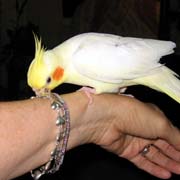 Heavy Metal Poisoning and Sources of Lead and Zinc:
Metal hardware, wires, coat hangers, pennies, twist ties for plastic bags, stems on artificial
flowers, Christmas tree ornament hooks, stained glass items, some wire toys, cages with loose solder and chipped paint,
fishing weights, drapery weights, costume jewelry, zipper teeth and paint in older
homes, glue on cardboard rolls from paper towels and bath tissue, duct tape,
metal ends of light bulbs, flooring, lead water pipes in your home, can all contain zinc or lead.
Galvanized
metals
are also toxic because a coating is applied over a lead or zinc base item. Ingesting
heavy metals or rust is LETHAL and will cause death
or permanent neurological damage if not treated immediately. If you have lead
or galvanized metal
water pipes in your home
or your source of drinking water comes from an underground well, avoid giving your bird
tap water to drink and bath in. The water could contain lead or zinc. Give your bird bottled water
instead. Symptoms of
heavy metal poisoning
include loss of balance, muscle weakness, inability to
fly, red droppings, vomiting and respiratory distress. Do not let you bird chew
on any type of metal or product that contains a glue-like adhesive.
Heavy Metal Poisoning and Sources of Lead and Zinc:
Metal hardware, wires, coat hangers, pennies, twist ties for plastic bags, stems on artificial
flowers, Christmas tree ornament hooks, stained glass items, some wire toys, cages with loose solder and chipped paint,
fishing weights, drapery weights, costume jewelry, zipper teeth and paint in older
homes, glue on cardboard rolls from paper towels and bath tissue, duct tape,
metal ends of light bulbs, flooring, lead water pipes in your home, can all contain zinc or lead.
Galvanized
metals
are also toxic because a coating is applied over a lead or zinc base item. Ingesting
heavy metals or rust is LETHAL and will cause death
or permanent neurological damage if not treated immediately. If you have lead
or galvanized metal
water pipes in your home
or your source of drinking water comes from an underground well, avoid giving your bird
tap water to drink and bath in. The water could contain lead or zinc. Give your bird bottled water
instead. Symptoms of
heavy metal poisoning
include loss of balance, muscle weakness, inability to
fly, red droppings, vomiting and respiratory distress. Do not let you bird chew
on any type of metal or product that contains a glue-like adhesive.
 Toys and Cages:
Check the cage for things that a bird could get its head, foot or nails
stuck into. By struggling
to free itself, a bird can break it's neck, toes, feet, or legs. Look for rings, clips, loops, coils of wire and
slits in toys. Never purchase a cage with openings large enough for a bird to get its head stuck in.
Rope toys fray
and toes can get entangled. Use only under supervision. Check cage toys daily
for signs of wear that could cause harm.
Toys and Cages:
Check the cage for things that a bird could get its head, foot or nails
stuck into. By struggling
to free itself, a bird can break it's neck, toes, feet, or legs. Look for rings, clips, loops, coils of wire and
slits in toys. Never purchase a cage with openings large enough for a bird to get its head stuck in.
Rope toys fray
and toes can get entangled. Use only under supervision. Check cage toys daily
for signs of wear that could cause harm.  Ceiling Fans
and Hanging Lamps: A bird will get severely injured,
disabled for life or killed instantly if hit by the moving blades of a ceiling
lamp. Birds landing
on hanging lamps may burn their feet or chew on wires, resulting in electrocution. Tiffany lamps
contain lead soder between panels of glass. Birds that ingest it will get lead
poisoning.
Ceiling Fans
and Hanging Lamps: A bird will get severely injured,
disabled for life or killed instantly if hit by the moving blades of a ceiling
lamp. Birds landing
on hanging lamps may burn their feet or chew on wires, resulting in electrocution. Tiffany lamps
contain lead soder between panels of glass. Birds that ingest it will get lead
poisoning.


